I stumbled across an Abercrombie & Fitch catalog from 1907— back when they were an outdoors supply company! It’s a massive catalog with more than just a bunch of stuff to buy; it has several good articles about how to prepare for various types of outdoor trips, a recipe section, and detailed info about materials for clothes and items and what the difference is between picking a cotton cloth vs. a wool, for instance.
I’ve pulled several intriguing sections from the catalog and transcribed them myself (no AI) to share here on Old-Fashioned Finds. This is the first, which focuses on preparing for a multi-week canoe trip. It includes some tips about hiring a guide, what to pack for yourself and for the whole party (of four people), and even weights and sizes of what everything would add up to.
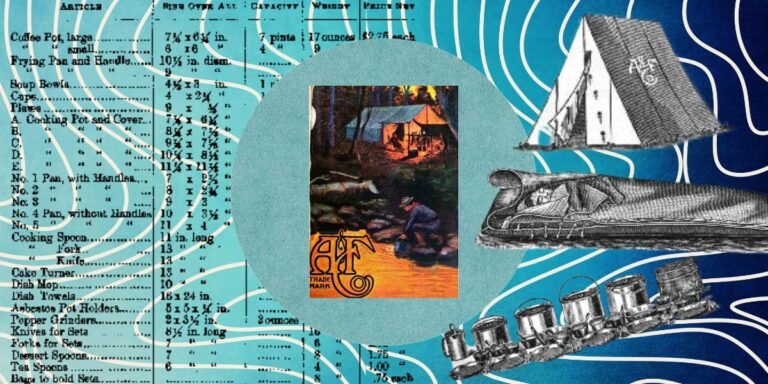
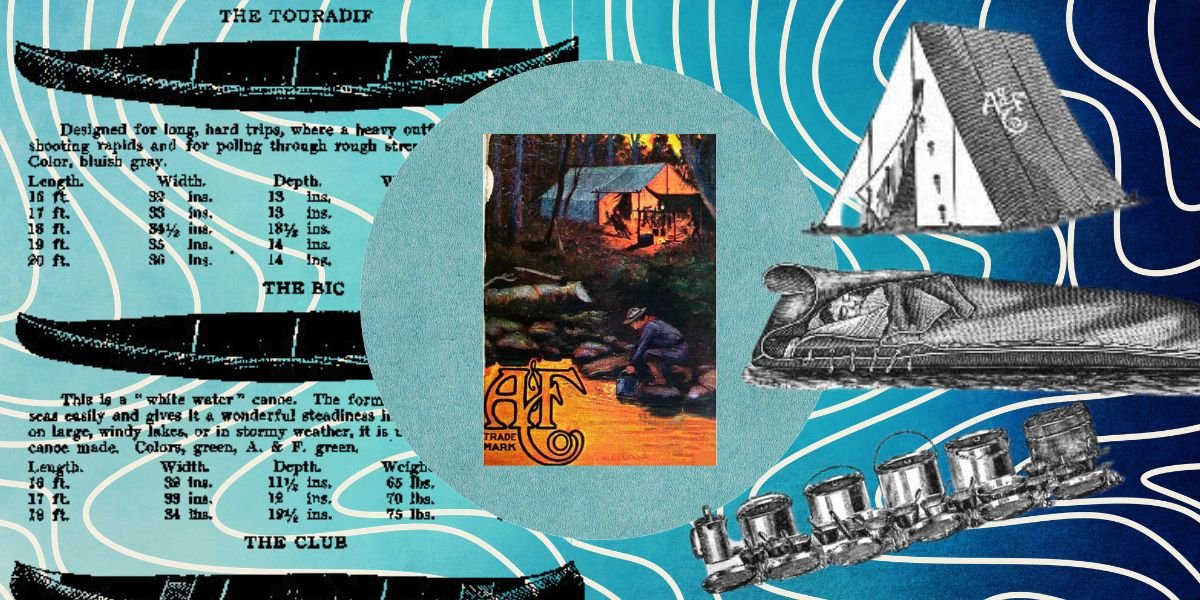
As this is from a catalog, I’ve also included some images from elsewhere in the catalog that show examples of what they’re talking about re: shelves, pots, sleeping bags, etc.
Enjoy!
🌟 Related: What to Pack for a Trip to Egypt in 1892
Note: Some links here are affiliate links, which means if you click on it and buy something, I get a small percentage. This money goes towards running the blog. Thank you for your support!
PREPARATIONS FOR A CANOE TRIP
from Abercrombie & Fitch Co. Catalog, 1907
LOCALITY
This is the first point to be considered. These suggestions are relative to the most popular form of trip, one through wooded and watered country, by canoe and portage. Maps of such localities and information are furnished by the Passenger Agents of the Railroad and Steamship Companies, including description of places, list of guides and best points of departure.
We have collected a great deal of information about trips and more is constantly coming to us, as our friends and ourselves bring in new experiences. We are glad to share these results either through interviews or correspondence.
GUIDES
On a canoe trip, guides are advisable, at least one with his canoe for each person; everywhere one man and his outfit is considered a sufficient care for one guide, and there are cases where a man needs two guides; an extra one as cook will add much to the comfort, for having a cook will prevent taking time for the routine work of camp. The wages of guides vary from $1.00 to $3.00 per day, according to the country and what is customary for the guides to furnish, in some cases services, canoe and outfit. Canoes can be hired for 35 to 50 cents per day, depending on the time of hire. Each canoe should be supplied with two paddles and where necessary a setting pole. Should the canoe be hired the choice of type should be left to the guide.
OUTFITTING
Those new to camping often leave their outfitting to be attended to by the guides, resulting in discomfort due to the guides’ different point of view. Experienced campers make sure of their needs being supplied by owning their equipment collected and made ready at home, not left to be hurried over at the point of departure; even provisions had better be bought in the accustomed market. All can be carried within the 150 pounds baggage limit granted on a first-class ticket.
PERSONAL OUTFIT
No matter where you go, wool is the best material for clothing; it keeps drier, is softer and makes less noise in the brush than either cotton or linen, and consequently makes the best hunting garment. Several thin layers of clothing or blankets are very much warmer than one layer of the same weight. If a person objects to the feeling of wool let the layer next to the skin be of some other material. Do not take clothes so old and worn as to require repeated patching and sewing. Following is a list of necessaries including clothing and articles worn from point of departure:
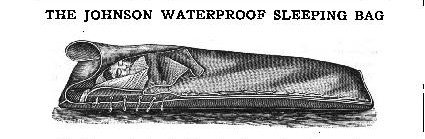
Three suits thin woolen underwear; 4 pairs heavy woolen socks; 2 gray or blue flannel shirts; 1 Pontiac heavy shirt; 1 large loose coat; 4 handkerchiefs; 1 neckerchief ; 1 felt hat, wide brim; 1 pair trousers; 1 towel; 1 pair Scotch knit wool gloves; 1 hair brush; 1 tooth brush; 1 comb; 1 cake soap; 1 pair good hunting boots; 1 pair low oiled moccasins; 1 match safe, waterproof, that floats; 1 belt; 1 sheath knife; 1 watch; 1 compass (pocket); 1 2½ lb. belt axe; 1 poncho; 1 package toilet paper; 1 pack strap; 1 head net; 1 Johnson sleeping bag, folded and laced together at foot and one side, and covered with a waterproof cover; 1 hunting hood, also used as night cap; 1 suit all wool pajamas; 1 hot water bottle, 4-quart, this filled with hot water and placed in sleeping bag on a cold night is better than 5 pounds of extra blankets; 1 piece cotton line, 12 feet long; rifle, ammunition, fishing rod, tackle, camera, tobacco, etc., according to the person’s taste and the season of the year; 1 air mattress, weighing 9 pounds, makes an ideal bed and saves a great deal of time gathering boughs.
PARTY OUTFIT—FOUR PERSONS
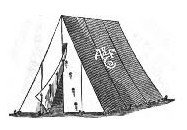
One 7×9 silk tent with sod cloth—12 lbs.; 1 7¼x7¼ pyramid tent for guides, weighing 8 pounds, both with mosquito proof front if necessary; 1 pot stove for heating wall tent (with telescopic pipe) ; 1 A. & F. Co. nested cooking and eating outfit of aluminum as follows:
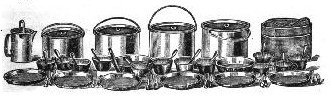
One cooking pot, 9×7½ inches, holding 13 pints, with cover and bail handle; 1 cooking pot, 8×7 inches, holding 10 pints, with cover and bail handle; 1 cooking pot, 7×7 inches, holding 7 pints, with cover and bail handle; 1 coffee pot, 6×6 inches, holding 4 pints, with cover and bail handle; 4 each, cups, bowls, plates, knives, forks, teaspoons and dessert spoons; 2 shallow serving pans with folding handles; 1 dish pan 10×3½ inches; 1 large and 1 small fry pan with detachable handles; 4 sprinkling boxes for pepper, salt, spice and mustard; 4 dish towels, and 2 cloth pot holders; 2 canvas water pails; 2 canvas wash basins; 1 cake soap; 1 cylindrical fiber case, 12×14 inches, to contain the pot stove, cooking and eating outfit, sprinkling boxes, towels, pails, basins and soap, some pieces of cheese cloth for pudding cloth, bean pot, etc., this outfit may be bought and weighs 24 pounds; 1 18-inch aluminum folding reflecting baker or oven in canvas bag containing 1 bread board, 1 wire broiler, 1 large cooking spoon, 1 cake turner, 1 dish mop; (this package is 19x1x14 inches, and weighs 8 pounds).
One ¾ axe; two small spools of assorted brass wire; 1 box of assorted nails, ¼ pound; 1 oil stone, small; 1 flat file, and piece of emery cloth; 1 pair pincers, medium; 1 awl handle and set of awls; 1 stick of cement for mending fishing rods, etc.; 1 pair scissors, needles, buttons, safety pins; 1 piece of beeswax; 1 spool of linen thread; 1 B. G. I. cleaning rod of brass, for rifles; 1 vial of gun grease; 1 roll of heavy twine, about 30 feet. Roll these small articles in an old piece of cloth suitable for gun cleaning and carry in a little canvas bag with a tube of white lead and copper tacks for mending canoes. This package weighs about 3 pounds. Cylindrical food bags, 3 9-inch provision bags, 2 fiber telescopes, 2 5-6 pack cloths.
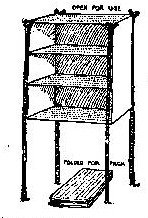
Two folding lanterns, aluminum, weighing 4 ounces each; 36 candles, weighing 3 pounds; 1 rolling table top, weighing 3 pounds; 1 set of folding shelves, weighing 2 pounds; 1 brass tube of matches, weighing 1 pound; 1 wall pocket, weighing 1 pound; 2 pack straps, weighing 5 pounds; note book and pencil should be carried; paper, stamps and envelopes may be useful.
FOOD LIST FOR FOUR PERSONS FOR TWO WEEKS
- Flour, 24 lbs.
- Corn meal, 10 lbs.
- Beans, 6 lbs
- Erbswurst, ½ lb.
- Bouillon capsules, 1 lb.
- Lentils, 2 lbs.
- Sugar, 9 lbs.
- Royal Baking Powder, 1 lb.
- Coffee, 2 lbs.
- Butter, 6 lbs.
- Pork, 10 lbs.
- Shredded Cod Fish, 1 lb.
- Peerless Evaporated Milk, 5 lbs.
- Oatmeal, 2 lbs.
- Rice, 6 lbs.
- Julienne, 1 lb.
- Soup Tablets, ½ lb.
- Evaporated Apples, 2 lbs.
- Evaporated Apricots, 2 lbs.
- Salt, 1 lb.
- Chocolate, 1 lb.
- Tea, 1 lb.
- Bacon, 6 lbs.
- Dried Potatoes, 4 lbs.
- Shelled Nutes, 1 lb.
- Dried Eggs, 1¼ lb.
- Dried Onions, ¼ lb.
Pepper, spice, mustard– shaker full. Total, 106½ lbs.
One sees from the small quantity of meat on the list that game or fish will have to be supplied from the woods and waters, but this list is made out for two weeks even without that addition, if there is no waste.
By actual experiment with this list on various trips the maximum consumption of food per head per day was 1.88 pounds, the minimum was 1.23 pounds.
One might be criticised for carrying seven pounds in the shape of rolling table, folding shelves and wall pocket, but the outfit as described will not be overburdened with these articles, and the comfort derived from using them is well worth the additional weight.
PACKING AT HOME
A fiber telescope 18x24x12 inches, with straps and handles, makes the lightest and most convenient packing case. The different articles of food are put up in cylindrical water-proof bags 8½ inches in diameter, and of varying heights, with the exception of butter, which is packed in a cylindrical friction-top tin can of same diameter, and pork, bacon, chocolate and coffee, which are packed in Pantasote leather bags of the same shape. Each package is marked with name of contents.
Pork and Bacon should be sliced for convenience in packing and use and the waste of cover, rind, etc., removed so that the weight rep resents clear food.
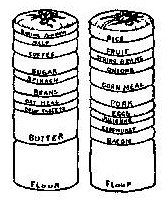
These food packages are then packed one upon another into three cylindrical water-proof canvas provision bags, nine inches in diameter, twenty-four inches high and are then ready for the packing case, the canoe or portage. On the outside of each is a tag showing contents.
Place the folded sleeping bag in the bottom of one of the cases, next one of the tents, then two of the provision bags, and in the hollow made by the bags pack the clothing of one person, pack straps and small articles, then the air mattress.
In another case place the other folded sleeping bag, on top of that the remaining provision bag and beside it a roll made of the stove pipe, the rolling tables and the folding shelves. Next put in the baker outfit, remaining pack straps and small articles, the other tent, the clothes belonging to the other individual and the air mattress.
This makes two articles of luggage, the cooking outfit and stove in their cylindrical case make a third, all ready for the railroad. Leave out the Pantasote ponchos for use in case of rain.
PACKING AT THE POINT OF DEPARTURE
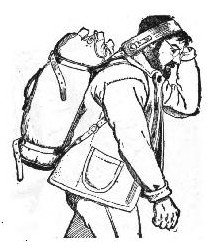
Spread out the pack cloth, lay one of the sleeping bags in the center folded flat as possible, 18×24 inches; on this place the air mattress, then the larger tent, next the baker outfit, finally the extra clothing and small articles. Fold the cover tightly over the package thus made, fold down the ends, turn them over and secure with the twelve-foot rope. Fasten one pack strap on to this package. This pack will weigh about 50 pounds.
Spread out the other pack cloth, and in the center place the other sleeping bag folded 18×24 inches, then the air mattress, next the guide’s tent, next the wall pocket, then the extra clothes of the other individual, and the remaining small articles. Fold the cover tightly over the pack age thus made, fold down the ends, turn them over and secure with the twelve-foot rope; fasten another pack strap to this package. It will weigh about 50 pounds. If the ponchos are not in use fold and slip them under the straps.
Fasten a pack strap on two of the provision bags; this will make a seventy-pound pack. The remaining provision bag, the stove pipe packed with milk, the table top, folding shelves and guide’s blankets, etc., fastened together with a pack strap will make another seventy-pound package. This will leave the rifles, fishing rods, cameras, etc., to be carried by hand, and the cooking outfit as an extra load for the strongest packer. A hundred pound-pack is considered a moderate load over a short portage. If the party expects to bring out any heads, scalps or hides, get a peck of coarse salt at the point of departure.
Transcriber’s Notes
This does seem like quite a lot to carry around and I definitely don’t think you need to carry things like folding tables and shelves on a normal camping trip. However, Abercrombie & Fitch was a HIGH END brand (an “elite outfitter” according to Wikipedia) and this list was no doubt aimed at people who would not only be hiring a guide, but probably also a cook and a couple other people to carry their stuff around. It’d be more like glamping!
It’d be interesting to compare the prices in this catalog with another outdoor sports retailer of the time and see what the differences are. The silk tent shown in this article is between $7.60-32.60 depending on the size, plus another $0.75-2.50 for the poles and stakes. That’s equivalent to about $270-1,161 in today’s money (plus another $27-89 for the poles) which certainly SEEMS pricey.
Source
Abercrombie & Fitch Co. 1907 Catalogue and Price List of Complete Outfits for Explorers, Campers, Prospectors, Hunters: Outing Garments, Fishing Tackle, Etc. “Preparations for a Canoe Trip,” pages 4-8. PDF from Archive.org: https://archive.org/details/AbercrombieAndFitch1907Catalogue/page/n131/mode/1up
Inflation calculator: https://www.in2013dollars.com/