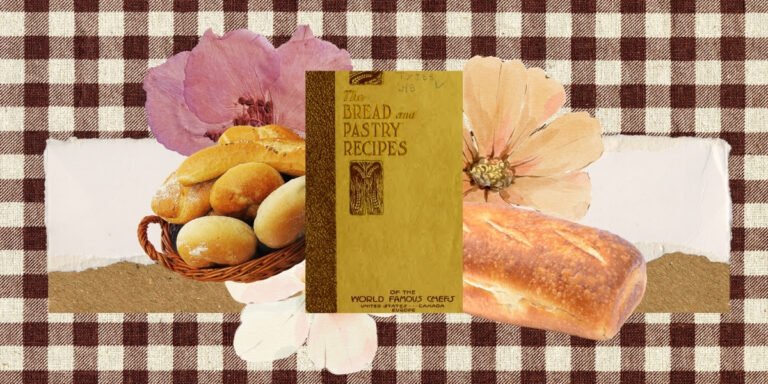
This is from an Abercrombie & Fitch Co. catalog from 1907– back when they were a high-end sports/outdoor goods store! The catalog is super detailed and has lots of info about all sorts of outdoor trips, AND it has a pretty substantial recipe section with camping recipes! I was intrigued by the simple recipes and (seemingly) easy-to-make meals, which honestly reminded me of, like, Little House on the Prairie type food.
I transcribed the recipes myself (no AI) from a PDF of the catalog provided on Archive.org. Enjoy!
👉 More from the same catalog: How to Pack for a Canoe Trip in 1907
🌟 More Outdoors / More Camping / More Vintage Recipes
A Note About Measurements
If you check the packing list from the same source, it recommends bringing teaspoons, dessert spoons, cooking spoons, etc. and it gives how many pints each container can hold as well. So, these recipes very cleverly use those very utensils in measuring out how much salt/rice/whatever you need, rather than tell you to bring proper measuring spoons and whatnot!
That said, I’m pretty sure these are the sorts of recipes where you don’t need to be super precise about measurements anyway.
Note: Some links here are affiliate links, which means if you click on it and buy something, I get a small percentage. This money goes towards running the blog. Thank you for your support!
Cooking Recipes for Four Persons
from Abercrombie & Fitch Co. catalog, 1907
COFFEE—Have the coffee ground fine, place eight heaping dessert spoonfuls in a hot coffee pot, add two quarts of boiling water and set beside the fire for a few minutes. Never boil coffee.
TEA—Place four heaping teaspoonfuls of tea in a hot pot, add two quarts of boiling water, set beside the fire for a few minutes. Never boil tea.
CHOCOLATE—Make a paste with two heaping dessert spoonfuls of milk powder and eight dessert spoonfuls of chocolate (Whitman’s) and a little water; add two quarts of boiling water and sweeten to taste.
BISCUIT—Place two pints of flour in bread pan, add two heaping teaspoonfuls of baking powder, one level teaspoonful of salt, some cold pork fat the size of an egg and thoroughly mix while dry; add six heaping dessert spoonfuls of evaporated milk and cold water enough to make as soft a dough as can be rolled on the bread board which has been previously sprinkled with flour. Roll about one-half inch thick and cut into convenient pieces with knife. Place in the greased pan, place the pan in the rack of the baker before the fire. Bake until a fork inserted in a biscuit shows no dough when withdrawn.
BREAD—Make the same as biscuit only thin enough with cold water to pour into a pan and bake in the same manner. This will make two panfuls.
OATMEAL—To two quarts of boiling water add one teaspoonful of salt, then add while stirring two cups of oatmeal and boil for ten minutes.
WHITE SAUCE—Take a piece of butter the size of an egg, melt slowly in the fry pan and stir in thoroughly one heaping dessert spoonful of flour until perfectly smooth; add one-half teaspoonful of salt, one-quarter teaspoonful of pepper, a mixture of six heaping dessert spoonfuls of evaporated milk and one cup of hot water. Mix thoroughly while boiling. Serve with boiled fish.
CORN BREAD—Place one pint of flour and one pint of corn meal in the bread pan, add two heaping teaspoonfuls of baking powder, one level teaspoonful of salt, two dessert spoonfuls of dried egg, one teaspoonful of sugar and cold pork fat the size of an egg. Mix thoroughly while dry. Add six heaping dessert spoonfuls of evaporated milk and cold water enough to make a thick batter, stir until well mixed and pour into the greased pan; place the pan in the rack of the baker and the baker before the fire. Bake until a fork inserted in the bread shows no dough when withdrawn. This makes two panfuls.
GRIDDLE CAKES—Place two pints of flour in bread pan, add two heaping teaspoonfuls of baking powder, one level teaspoonful of salt, two dessert spoonfuls of dried egg, and thoroughly mix dry. Add six heaping dessert spoonfuls of evaporated milk and cold water enough to make a batter about the consistency of very thick cream or until it pours from the mixing spoon a continuous stream. Be careful not to make the batter too thin. Fry in the fry pan kept greased with a piece of pork fat held on a fork.
BAKED BEANS—Wash two cups of beans and parboil until when placed on a fork or spoon and blown upon their skin suddenly splits, then drain, wash in cold water and drain. Cover the bottom of the bean pot about two inches deep with the beans, then place a piece of salt pork as big as a fist (about one pound) in the center, and pour the rest of the beans around and over. Add one-half teaspoonful of salt, one-quarter teaspoonful of pepper and one dessert spoonful of sugar, then cover with warm water; place a piece of thin cloth over the top and force on the lid. A hole has already been dug in the ground one foot deep and one foot in diameter in which a fire has been burning for several hours and stones made hot. Scrape out the ashes, coals and stones, put in the pot of prepared beans, pack and cover with the hot coals and stones and cover all with earth. Leave for eight or ten hours and in case of rain cover with bark. This is as delicious a dish as is known to woodsmen. A piece of venison added with the pork makes an acceptable variety. A pinch of dried onion is excellent.
FRUIT—Clean one pint of evaporated fruit and put it in two quarts of cold water; add half a cup of sugar and allow to simmer until done. Serve with a little spice. An iron or tin pot will discolor the fruit and spoil its flavor.
JULIENNE—Julienne is a mixture of vegetables cut in strips and dried. It supplies the vegetable acids craved by the human system. It may be used as a plain vegetable in a soup or in a stew. For a vegetable soak a cup of Julienne an hour, drain and boil with two quarts of water and one level teaspoonful of salt until tender; drain and serve with plain seasoning or with white sauce.
JULIENNE SOUP—Boil in two quarts of water one cup of Julienne; add one-half teaspoonful of salt, and a scrap of pork for flavoring, add water as it boils away. In one and one-half hours add four Bouillon Capsules and serve.
STEW—Place one cup of Julienne in two quarts of boiling water, add one dessert spoonful of rice, one dessert spoonful of lentils, a pinch of onion and a half teaspoonful of salt; boil one-half hour, replacing water as it boils away, and add two pounds of venison, moose, rabbit, or of any meat or fowl; use marrow bones if possible and a little pork for seasoning, boil one hour and if desired thicken when done with a paste made of one dessert spoonful of flour and some of the liquor from the stew. A stew is cooked best by slowly boiling and there is less danger of scorching. When taking off the fire add four Bullion Capsules.
POT ROAST—Parboil Julienne and other vegetables the same as for a stew; add the meat, cover the pot as when baking beans and put it into a prepared bean hole and leave the same as baked beans. Season with pepper and mustard as desired.
PREPARED SOUP—To two quarts of boiling water add one of the soup squares previously broken and made into a paste with warm water and boil ten or fifteen minutes. These squares make a fine soup and are a change from the usual food of the woods.
LENTILS—Wash one cup of lentils in cold water, drain and put in two quarts of boiling water. Add a level teaspoonful of salt. Boil one-half hour or until done, drain and serve with pepper, salt and butter to taste.
ERBSWURST—To two quarts of boiling water add one-third of a package of erbswurst and boil ten to fifteen minutes. This is the celebrated pea meal sausage, the army ration, and is nearly a perfect food containing all the necessary elements except water. Use less water and when cold it can be cut in slices, dipped in flour and fried in pork fat.
RICE GRIDDLE CAKES—In the recipe for griddle cakes substitute one pint of cold boiled rice for one pint of flour and proceed as for griddle cakes. Cold boiled potatoes, oatmeal or hasty pudding may be used in the same manner. If convenient save water in which rice is boiled to make griddle cakes.
BOILED RICE—Thoroughly wash and rinse one cup of rice in cold water, drain and place in at least two quarts of boiling water in an uncovered pot, add two teaspoonfuls of salt and boil hard from twelve to twenty minutes, or, adding water as it boils away until done. New rice boils more quickly than old, test by tasting. When done drain and set on the fire to dry. If convenient save the water for soup, stews or griddle cakes.
HASTY PUDDING—Add one-half teaspoonful of salt to one quart of boiling water, and stir in slowly one cup of corn meal. Boil ten minutes or until done, stirring constantly to prevent scorching.
FRIED MUSH—Prepare as for hasty pudding. Pour into shallow pans and allow to cool; cut into slices and fry in pork fat until brown. Oatmeal may be used in the same way.
CODFISH CAKES—To two pints of mashed potatoes add one-quarter cup of flour and one cup of shredded codfish; the amount of codfish may be changed to suit taste. Thoroughly mix, make into cakes and fry in pork or bacon fat.
CREAMED CODFISH—Prepare two pints of white sauce without salt; while it is boiling stir in one cup of shredded codfish. Serve on toasted biscuit or with mashed potatoes.
POTATOES—Take two cups of dried potatoes and put into three cups of boiling water (be exact), stir while boiling three minutes, add two dessert spoonfuls of evaporated milk, butter, salt and pepper to taste, and you will have as delicious mashed potatoes as can be had from fresh and with much less trouble. Dried potatoes have great advantages over fresh; they are one-twelfth the weight, need no preparation, all waste is eliminated, they do not sprout or rot, and no amount of freezing will injure them.
POTATO CAKES—Prepare the potatoes as above. Mix in one dessert spoonful of flour, moisten slightly, pat into cakes, sprinkle with flour and fry in pork fat.
SWEET POTATOES—These and the rest of the dried vegetables are cooked just as though fresh, bearing in mind that a cup full is enough for two people, and that every bit of these vegetables is edible, all waste having been eliminated. The process is boiling, and the best we can say is to boil until done, which takes from 10 to 20 minutes. No soaking is necessary; they are added to soups and stews just as they are.
TOASTED BISCUIT—Left over biscuit cut open and slightly moistened, placed in the broiler and toasted over hot coals, makes a very acceptable dish.
ROAST MEAT—Prepare a piece of meat, say six pounds, by removing bone and surplus fat and tissue. Place in pan of baker or oven and cover bottom of pan with water. Place several strips of sliced pork over the meat, sprinkle well with flour, pepper and salt. If meat is a little strong or “gamey,” a few slices of onion or a sprinkling of dried onions will enhance the flavor. Cook until brown upon one side, basting frequently with the gravy from the pan, then turn and brown on the other side, basting as before.
SOUP—Take about four pounds of the lower leg bones of deer, moose, caribou, sheep, goat, elk, etc. Crack the bones thoroughly so that the marrow will run out. Place all in a large pot, add about two pounds of meat cut in small pieces, a large handful of Julienne, and one of rice, a teaspoonful of salt, some pepper and a few pieces of pork and four quarts of water. Boil slowly until meat is shredded, then add water to make desired quantity necessary.
MUSKRAT—Skin and clean carefully four muskrats, being particular not to rupture musk or gall sac. Take the hind legs and saddles, place in pot with a little water, a little Julienne, salt and pepper and a few slices of pork or bacon. Simmer slowly over fire until half done. Remove to baker, place water from pot in the baking pan and cook until done, basting frequently. This will be found to be a most toothsome dish.
RABBITS—Skin and clean two rabbits. Remove and throw away the head. Cut off legs through body joint. Cut the back into three pieces. Place in a pot with a little Julienne, some pepper and salt and parboil. To fry, remove from pot, sprinkle with flour and fry in either butter or lard. To roast, place in bake pan, spread a slice of pork on each piece and roast until done, basting frequently.
To stew, leave in the pot, add a table spoonful of rice, the same of beans and of Julienne, and a teaspoonful of dried onions. Boil until the meat separates from the bones, adding water so that the pieces of meat are always covered.
OPOSSUM—Carefully skin and clean one “possum.” Place in a pot with water and parboil. Remove from pot, place in bake pan with a little water, sprinkle with flour, salt and pepper, cover with bacon, and roast until crisp.
TURTLES—The turtle family must be distinguished from the tortoise. We believe all of the turtle family are edible and some of the tortoise family, too. Kill the turtle or turtles by placing in a pot of boiling water.1 Remove and cool until it can be handled. Lay on its back and with an axe crack the joint of the bottom shell where it joins the side of the top shell. Pull off bottom shell and remove the entrails and gall bladder. Cut off the head and skin the legs, removing toes and also the outer covering of shell. Place in a pot of fresh hot water and boil until all meat has left the bones. Remove bones only, and add water for required quantity, a little Julienne, pepper and salt to suit and boil until vegetables are done. If at hand, add a table spoonful of sherry and brandy to each quart.
BOILED FISH—Clean the fish and take off heads, tails and fins, place a small piece of pork inside each, pin in a towel loosely and boil in salted water. Four pounds of fish are sufficient and requires about fifteen minutes to boil. Remove the towel and serve with white sauce.
BROILED FISH—Clean the fish and cut off heads, tails and fins. Open through both belly and back, dry and sprinkle with salt and pepper, lay them in the broiler, and place over the fire until hot and rub with a piece of bacon or pork, repeating until done.
FRIED FISH—Clean the fish and cut off heads, tails and fins. Open through both belly and back, cut out the back bone, dry, sprinkle with salt and pepper, cut into convenient pieces, roll in corn meal and fry in pork fat. Very small fish need only be cleaned and may then be fried or broiled whole.
BROILED MEAT—Lay the cut slices of meat, three-quarters of an inch thick in the broiler and put over the hottest part of the fire for a few minutes until both sides are seared, then withdraw and cook slowly until taste is suited, rare, medium or well done. Salt and pepper while cooking and serve with a little butter.
BROILED BIRDS—Clean by opening on the back, sprinkle with salt and pepper and lay in the broiler, place over a hot fire and when heated through rub with a piece of bacon or pork. Keep repeating this until done.
PORK—Pork is used mostly for its fat and as a flavoring in soups, stews, etc. It should be washed in boiling water to remove salt and fried slowly in a pan.
BACON—Bacon can be either fried or broiled over a slow fire.
GRAVY—Melt a dessert spoonful of pork or bacon fat in the fry pan, rub in a dessert spoonful of flour until smooth and browned. Then add two cups of boiling water and a dash of pepper.
BOILED FRUIT PUDDING—Make half the quantity of dough as given in the recipe for biscuit to which has been added one-half cup of sugar. Roll into a strip six inches wide, and double the thickness of pie crust, spread with fruit sauce, roll up and tie in a cloth, drop into boiling water and keep boiling thirty minutes. Remove the cloth and serve with brandy sauce.
BRANDY SAUCE—Melt together a piece of butter half the size of an egg, one-half cup of sugar, then stir in until smooth a teaspoonful of flour and a pinch of salt. When perfectly smooth add two cups of boiling water; boil for five minutes, remove from the fire and add a dessert spoonful of brandy and a dash of spice.
FRUIT PIE—Mix thoroughly while dry two cups of flour, an even teaspoonful of baking powder, a pinch of salt and a piece of pork fat twice the size of an egg; then stir in one cup of cold water. Roll very thin on the bread board previously sprinkled with flour, cover the bottom of the greased pan with part, fill with fruit sauce and cover with the remaining half. Put in the rack of the baker and bake before the fire.
Wherever in these recipes evaporated milk is called for, dried milk or fresh milk may be used in the following proportions: A dessert spoonful of dried milk equals three dessert spoonfuls of evaporated cream, and fresh milk may be used in the same quantity as water. We advocate the use of evaporated milk on account of its good keeping qualities, greatly condensed form, ease in handling when packing. Where the weight and bulk of evaporated milk is not objectionable, it is recommended as being easier to use and very popular. Condensed milk, owing to the large quantity of sugar contained in it, is not suitable for cooking.
BEAN SOUP—Soak two cups of beans over night. Boil in two quarts of water, add one-half teaspoonful of salt, a pinch of dried onion, sev eral dashes of pepper, a little mustard, half a cup of salt pork diced. Boil three hours, or until the beans are cooked to pieces. Add water as it boils away, to keep the required quantity. Cooking may be hastened by frequent stirring and mashing the beans against the pot. If the skin of the beans is objectionable, strain; but this sacrifices food value.
DOPE—Place a pound of diced salt pork in the fry pan with water and boil one minute. Pour off the water and fry the pork until nearly brown. Remove the pieces and rub into the hot fat three dessert spoonfuls of flour, a little pepper, allowing the flour to cook in the fat without browning. When perfectly smooth, add one quart of water in which twelve dessert spoonfuls of evaporated milk have been dissolved. Slowly bring to a boil, stirring constantly; add the pork scrap and serve.
This sauce is a palatable way of serving pork, is a good substitute for butter, and is particularly good with griddle cakes.
BOILED PARTRIDGE—Prepare in convenient pieces four pounds of partridge. Boil slowly in two quarts of water and add a teaspoonful of salt, a little Julienne, a pinch of dried onion and two dashes of pepper, filling up with water as it boils away. In about an hour, when nearly done, which can be ascertained by sticking a fork into the meat, add eight pieces of biscuit dough, each about the size of an egg, and boil briskly for twenty minutes, or until done.
BROWN FRICASSEE—Prepare four pounds of any of the grouse family, rabbit, or other small game, in convenient pieces. Sprinkle with salt and pepper, place in a fry pan in which has been melted some pork fat, add a pinch of dried onion, fry slowly and dredge with flour until one heaping dessert spoonful has been used. As soon as the meat and flour are brown, add two cups of hot water, cover and allow to simmer until done.
SCALLOPED FISH—Boil four pounds of fish until it will flake. Prepare a sauce as follows: Melt a piece of butter the size of an egg, add one heaping dessert spoonful of flour and stir until perfectly smooth, taking care not to let it brown. Add two cups of water in which have been dissolved six dessert spoonfuls of evaporated milk, one-half teaspoonful of salt and a little pepper, stirring constantly until it comes to a boil. Place the flaked fish in a serving-pan, cover with sauce and place in the reflecting baker before a hot fire, and brown.
FISH CHOWDER—Prepare four pounds of fish, leaving in the bones. Boil in two quarts of water, one-half cup of Julienne, a tablespoonful of rice, one teaspoonful of salt, a pinch of dried onion and a little pepper. Add hot water, to keep the required quantity as it boils for an hour. Then add two bouillon capsules, one-half cup of diced pork and the fish and boil until all is thoroughly done.
FISH SAUCE—Place a piece of butter, size of an egg, in the fry pan; melt and add two dessert spoonfuls of flour, one-half teaspoonful of salt, a pinch of dried onion, one teaspoonful of mustard and a little pepper. These must be well rubbed into the melted butter until perfectly smooth and well browned. Add two cups of water in which have been dissolved six dessert spoonfuls of evaporated milk, and bring to a boil.
COOKING IN CLAY—An excellent way to cook birds and fish, where clay can be had, is to cover the bird, unplucked and undrawn, with a coating of clay two inches or more thick. Place in a hot fire and cover with hot coals. In about an hour, when the clay is baked hard, crack it open lengthwise and take out the meat, the skin and feathers will remain, adhering to the clay; open the bird and drop out the entrails. Fish may be done in the same way. This method is equally good with birds and fish previously cleaned.
It must be remembered that boiling and stewing produce better and quicker results if done in a closely-covered pot. Also boiling at a high altitude requires much more time than at sea level, and for convenience and saving of time those foods requiring boiling which cook at lower temperatures should be chosen for mountain trips. In making high ascents food previously boiled should be carried, for they can then be easily made warm and ready for use.
Transcriber’s Notes
Corrected a few typos (e.g. Jiulenne to Julienne); changed “tea spoonfuls” to “teaspoonfuls” to be consistent (they had it both ways in the original text).
Footnotes
- Note from the 21st century: please do NOT kill a live turtle by putting it directly into boiling water. Yikes!! ↩︎
Source
Abercrombie & Fitch Co. 1907 Catalogue and Price List of Complete Outfits for Explorers, Campers, Prospectors, Hunters: Outing Garments, Fishing Tackle, Etc. “Cooking Recipes for Four Persons,” pages 103-110. PDF from Archive.org: https://archive.org/details/AbercrombieAndFitch1907Catalogue/page/n131/mode/1up