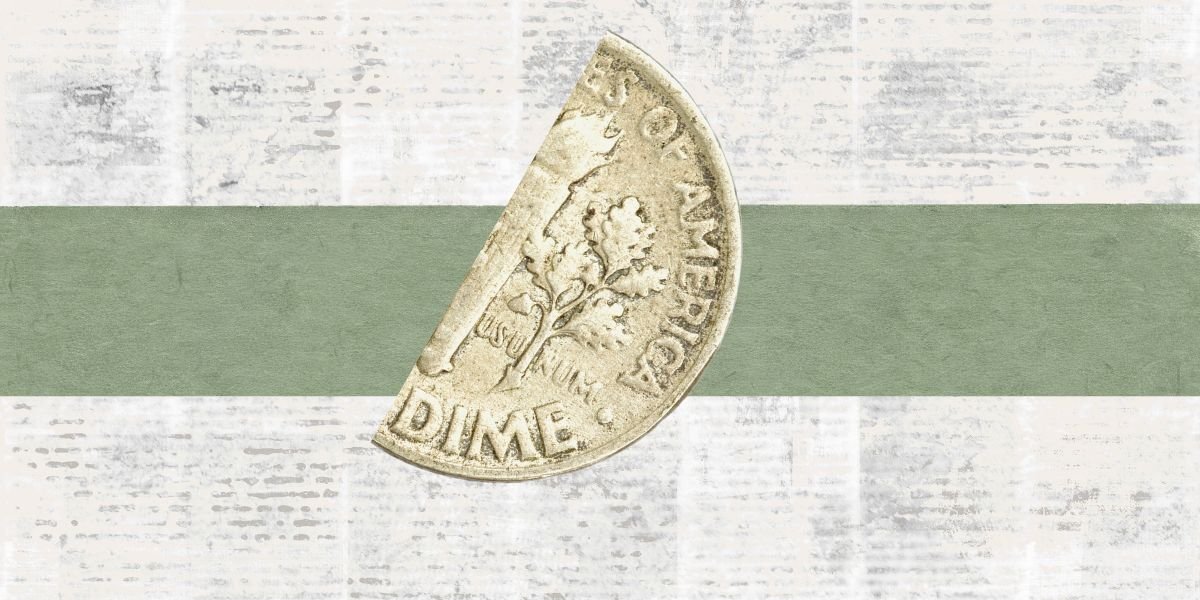
This is part of a self-published booklet from the late 1800s; it’s called “Living on Half a Dime a Day” and the author was a middle-aged disabled woman who didn’t have a strong support system, but who DID have a house, some land, a little income, and a lot of ingenuity. She made her own clothes, bought limited groceries and her hobby was reading; she had a reduced social life and had to do without luxuries, but felt like she was doing okay and in fact better than some people– she designated $1-2 of her own meager income for charity for those less fortunate!
Some quick math:
- $40 in 1880 is equivalent to about $1,313 in 2026
- $1 in 1880 is about $32.84 in 2026
- $0.05 in 1880 is about $1.64 in 2026
The booklet rambles and repeats a little bit, but overall is still a good read. Some of the things I liked in particular were: living according to your wishes/means and not by what society dictates (e.g. not wearing a bonnet if you don’t have the money for it, despite bonnets being “necessary” according to society), the importance of being charitable to others (and how the rich are less charitable than the poor!), letting yourself have things you enjoy despite being poor (as it makes life bearable), and enjoying what you have while you have it.
I couldn’t find a transcribed version of this available somewhere (though there IS an audiobook on LibriVox), so I made it myself using a PDF from Archive.org. Enjoy!
🌟 Related: Tips for Frugal Living from 1832
Note: Some links here are affiliate links, which means if you click on it and buy something, I get a small percentage. This money goes towards running the blog. Thank you for your support!
Living on Half a Dime a Day: An Actual Experience, by Sarah Elizabeth Harper Monmouth
YOU will hardly dissent if I say it would be easier to tell how to die on five cents a day than how to live on that sum; perhaps I should say exist, rather than live. It is keeping soul and body together on a small annuity, and I may say in the outset that to live on half a dime a day will prove an infallible “anti-fat” remedy. All the patent bottles advertised to prevent obesity will have to point heads down, and beat a retreat to ‘‘Coventry” before this bill of fare.
But I must admit that five cents, as a rule, only buys the food of a day, and other things than victuals are needed to enable a person to support life. There must be a place to live in, certainly; there must be clothing, and fire in cold weather.
I had an old house and some land. I got twenty dollars for grass, twelve for pasturing; in good years, three for apples. There was no work I could do owing to a crippled arm and blinded eye, save knitting and making mock flowers. The utmost I could ever earn in a year was fifteen dollars. Here, then, was exactly fifty dollars, from which ten must be deducted tor taxes. With the remaining forty I was not only to make “both ends meet,” but all ends meet, and twist into a neatly knotted skein, as my frugal gift to each succeeding New Year. Three years my “offering” has been made. I have “got round” on the forty dollars. It has been accomplished through contrivance, self-denial, and arithmetic.
You have heard of the man who “awoke one morning and found himself famous.” I awoke one morning and found myself poor—so sudden as that! or, I don’t know as I can say I awoke—I was like one in a dazed dream for months, an awful dream, in which a frightful incubus stretched itself across my gasping life, and paralyzed me with cold, clammy terror. I was as one stunned, and knew not what to do. There was the old roof above me, dearer than life. To sell or mortgage it seemed like disgracing myself in the eyes of the world and dishonoring my ancestors. But I had not a dollar of money left, and I had no health. Thus there was no work to which I could turn to earn a living. You have heard of people “living by their wits.” I was at my wit’s end how to live. Why didn’t I let my place on shares? I was too wise, thank you; I had tried that twice too many times in former years. For the same reason I did not take a family into the house. In that country place I could not have got rent enough to pay for damages done the buildings, nor could I have borne the unavoidable noise and annoyance of a family in my ill health and nervous debility. So there were forty dollars per annum I could reasonably count on. At the prospect my stomach began to fall into a collapsed state. “Twenty of this forty I must spend for food,” I thought. But the purpose was hardly fledged before war to the teeth was declared.
“It shall never be,” said the mind; “I care nothing about your old body; it must go to dust soon, any way. You must understand I sha’n’t starve, and I sha’n’t eat trash, either. I have always had the best, and the best I must have still. Understand, once for all, that I rule, and make your plans accordingly.”
Thus mind stepped to the front with a bold standard displayed, and it was for me to quietly recognize its position. I would live on seventeen dollars, and save three to continue my first-class weekly (C. U.), with its unrivalled editorials and Christian instruction. There was still the other half of the forty dollars unappropriated. I sorely wanted to take enough from it to supply me with two of the best magazines. I however ventured on but one, thinking there would be two or three books in course of the year I should feel as if I must have.
“What expensive tastes!” one and another will exclaim. Ah, people differ in their ideas as to what is and what is not expensive. To pamper the body and famish the mind I should deem the most ruinous and wicked extravagance; and a so-called cheap newspaper, which deals in the “abominations of society, and dumps the filth of the world” at your door every week, would have been a far too expensive investment for me. I could afford no such luxury. Seventeen dollars of my forty I assigned to supply food, ten for reading, leaving thirteen for fuel. I fortunately had enough wood on hand when the great loss befell to last two-thirds through a winter. The next one I got through with one cord, and sawed it myself, which saved a dollar and a half. I could only, with my disabled arm, worry off a few sticks for my fire each day. In very cold spells I took a warm freestone and crawled into bed. I was too ill to work, and thus to do saved firewood. I would put mittens on my hands and read a while, and when the room became too cold for this, cover all up and think over what I had read. This saved me in a degree from enervating myself further by fruitless poring over poverty and privations.
I had enough bed-clothes for comfort, but my own wardrobe, with the exception of one black suit, was pretty low when the loss came. I never bought a dress or pair of shoes for more than three years; it was entirely beyond my means to buy any article of clothing. So I had to tax both ingenuity and industry to get together garments enough for comfort and decency.
I had a palm-figured dressing-gown, lined with purplish flannel; the outside of this was all in tatters, while the lining was good. I ripped it in pieces, washed and pressed the flannel, got out enough of the palm-figures to make three bands around the skirt and sleeves. These helped to hide holes and faded spots in the flannel: then I ravelled an old scarlet, worsted under-sleeve, and trimmed each band with a narrow, fluted edge. So I had a quite dressy dressing gown—clean, whole—almost tasteful, and I took genuine comfort planning, piecing it out, day after day, with half mittens on my cold hands, sitting close to a cold fire. I was more than a week about it, for owing to shortness of firewood my days were very short, and my lame hand was very decrepid and painful. I recollected that when I had made this wrapper out of an abundance of nice, new materials, I had been quite impatient at having to sew on it for two days, and called in help to finish it off. People who saw it after it was remodelled, said it was handsomer than when it was new, and it is certain I thought a good deal more of it.
I said then, and have had occasion to say many times since, I was glad I bought good materials when I had the means, for they could be worked over a second, even a third time, to much better profit and advantage.
I made a whole common suit out of an old straw-bedtick, and out of the fragments of a pair of blue drilling overalls some former workman had left on the premises cut narrow strips and stitched on the skirts for trimmings. Well, I suppose I was proud, and determined to have some “style” about my garments. At a little distance my suit appeared like a neat, striped print, or more like a substantial gingham, and it had the wear of half-a-dozen calicoes in it. Indeed, it comes out like a new one every season, and bids fair to outlast the owner, and descend to posterity as an invention—may I not say, and escape the charge of vanity?—of both genius and necessity. My bed-tick gown! Will not some poet step forth and give it immortality?
Shoes and stockings were a problem for a long time. Shoes I had to learn to do without for the most part. One decent pair I would keep, but these could not be indulged in every day; such extravagance was not to be thought of. I took the soles of worn-out rubbers, lined them with flannel, and laced them on my feet as sandals.
At length I found a knitted shawl that had been in wear, I suppose, a quarter of a century, and quite a number of under-garments, which had been knit by hand out of homespun yarn in the old days when my father’s flocks had whitened the hills, so barren and bush-grown around me now. Then it had been the custom to have much cloth woven, and much yarn spun on the buzzing old spinning-wheel, for the family use. All these garments had been long thrown by, faded, defaced, and past wear. They were a mass of ends and no ends. After thoroughly washing them, I tried the strength of the yarn, and found it unrotted and not much moth-eaten. I had possessed myself of quite a prize. But it was the work of weeks to ravel, tie up, wind into skeins, color, rinse, and rewind into balls for knitting. I found some redwood and copperas, so I had several shades of color. Then I proceeded to knit five or six pairs of socks, and had balls of yarn left to “foot down” for years! I quite revelled in an abundance of material, and said exultingly, “There is one thing I shall not lack again very soon, perhaps never,” and for a long time, the last thing before retiring at night, I would go to the little drawer, pull it open, and take out my socks, pair after pair, and survey them with a fulness of satisfaction I had never in better days experienced over the nicest of boughten worsteds, or even silk. These were trophies of toil and contrivance; they had cost me not a little planning and labor, and I regarded them as my own successful achievements under difficulties. Therefore they had value and favor in my eyes.
I had fifteen mottoes in the house made on white muslin and cotton flannel. I soaked, washed, and boiled them clean, and supplied my drawer of linens.
I had no outside garment to wear abroad save a very old, defaced waterproof cloak. It looked like poverty personified; it was ragged, threadbare, the sleeves quite gone, of a most faded and weather-beaten appearance. There had been hanging in an outer room, I presume for fifteen years, a rusty, fulled cloth overcoat of my father’s. 1 don’t know why I had not given it away long before, but suppose I rather liked to see it hang there; it had a sort of look as if he were somewhere around yet. I had been charged with keeping that and a great pair of boots to frighten tramps |in case they attempted any neighborliness. A sight of such largeness in apparel might lead them to apprehend there was a large man not far off whose acquaintance it would not be judicious in them to cultivate. But I don’t think I ever attached any protective power to these articles. I would sometimes get into them myself, when I had to go out in a pouring rain to adjust the cistern for catching water, or dig a snow-path to the highway in winter.
But now that my wits were on the alert for means to piece out my wardrobe, I passed by nothing, and left no article unscanned that could afford the least chance of aid. So I put my hand on the great overcoat, and lifted it off the wooden peg. How heavy it was, and how rusty with age! It was lined throughout with fine black lasting, wadded and quilted in diamonds. My eyes gleamed as they lighted on this! I dragged the old coat off to my room in triumph; there I gloated and exulted over my prey, as I whetted a knife and went at it. I had no mercy, but just ripped, and ripped, and ripped, till the floor was strewn with parts of the parted garment. The other side of the thick cloth was a fine dark gray, just as bright as new. It was home-made cloth, and had the stock and value in it. I thought so much now of having things warm, such as would keep the cold out, and thus help save fuel. Next I took my old waterproof cloak, washed and pressed it smooth, and cut away the worn, threadbare portions, to replace with strips of the dark gray fulled cloth of the overcoat. I so managed that the cloak should look as if it had been purposely trimmed with another shade of material, and got a respectable garment that would do good service through a number of cold winters.
The cape of this cloak had a pretty lining of broad-plaided black-and-white flannel. This I removed and replaced with some breadths of old alpaca, which answered very well, and of the plaid flannel I fashioned an article of apparel suitable to wear abroad in spring and summer weather. To make it a better size, I pieced and stitched black gros-grain ribbon round the edge, ravelled a pair of under-sized worsted hose to knit a fluting, and finished this with a ball fringe; and it was, indeed, as pretty a cape as most anybody had! I expect, yes, I know, I was proud of it, for I would try it on at home before the glass sometimes, a thing I had never done with the best silk dress my palmiest prosperity had ever gave me.
My old cloak, renovated and remodelled by aid of the fulled cloth overcoat, was better than new to me; it was surprising what satisfaction I got out of my hard-contrived garments! Then there was the shiny, quilted lasting lining; it was as to shape almost exactly in the style of the reigning cloaks of the period, and the quilting was quite stylish, too. I had some cashmere to line and trim it, and my cloak was a “fit;” it was “in fashion;” it was satin, if you did not get too near, so black and glossy was the lasting. If I had only been a rich woman still, everybody would have been exclaiming at my extravagance in buying a quilted satin cloak! Lest even now some person should not see straight, I have never dared wear my cloak abroad much. I luxuriate in it at home on cold days, it keeps out so much cold, wadded throughout, and is as good as an oven on my back. I put it on Thanksgiving days to give thanks in.
I was in a state of high exultation after such a series of successes with the old overcoat; it seemed now so plain why I had kept it so many years. I fancied my father, mother, long in heaven, saw my poor, lame fingers and purblind eye, at work, ekeing, mending, and repairing my scant, worn garments, so intently and industriously for days and days, occupied and engrossed with the labor almost to oblivion of the hard fate, the wanton wrong, that had reduced me to this extremity.
But what pleased me most of all, I think, were the shoes I out of the old overcoat. The cloth was so thick and firm it would outwear a common pair of slippers. I ripped up an old shoe to have a good pattern, and got quite a neat fit. I haven’t had to go without shoes since. My German slippers are said to be prettier than those ordinarily found at stores. They were warm, comfortable, and not unsightly. They satisfied me. More than that, the mind failed not to celebrate with the deep, strong joy which unwonted effort and endeavor imparted, every victory gained over the supremacy of bodily wants. It rejoiced exceedingly over every obstacle surmounted which hindered or disputed its own supreme sway. The home-made shoes shut off the shoe-bill at the store, and gave me Harper’s magazine, with pages more irradiated through the economy and contrivance by which I had possessed myself of them, than by the learning and genius of the writers, I might almost say. At least the having worked through difficulties to obtain the magazine imparted the keenest zest and enjoyment to the reading. I had fought with poverty for a prize, beat down the grim monster, and come off victorious, and as I turned the freighted, sparkling pages, my heart sang a song of triumph. I would pull on my half-mittens, wrap my double, gray blanket all around me, put a freestone to my feet, and my back to the stove with its very small fire, and go to my reading, wondering and doubting if in any sumptuous parlor of wealth and magnificence a lady in diamonds and velvets sat down to her new mayazine with the zest and pleasure that I did. Of course not; every day brought new books and periodicals to her hand, to be skimmed over and lightly tossed aside. My one or two were read and reread and thought upon, and the current number was not passé when its successor came.
Thus mind fought the battle with despondency, in which injustice, wrong, and misfortune threatened to engulf it. There were enough to prescribe society, the diverting of attention by outside objects. But society, such as lay around me, did not present anything worthy or engaging. To one who had once and again proved its hollowness and false appearances, its insincere professions of kindness and good faith, it was sickening and revolting. I shrank from it as a “burnt child dreads the fire.” It seemed unfeeling and cruel to urge one in my circumstances to go into society. There my mendicancy would be thrust upon my consciousness in strongest shades of contrast with former ease of condition. Under my own roof I was not humiliated beyond endurance; I kept my self-respect there; but if I attempted any moving about in former circles, the comparison of present with past condition forced itself on me with such startling vividness that I was overwhelmed, and felt as if going distracted. Everybody was trying, consciously or unconsciously, to adapt themselves to my new situation, and whether it was by an increased carefulness to show attention, or a haughty distance of manner, or a condescending patronage, the one was about as killing as the other to encounter; and further, my dress was not equal to the demands of society. Had I seen fit to forego my reading and devote my utmost dime to it, I must still have been a shabby appendage at a parlor party. If I could have had access to a company of benevolent workers, persons who had a really noble and useful purpose for which they lived and labored, it would have been as power and inspiration to one in my depression and pain. With all of life wrenched away at once, as it were; its long-accustomed ways and habits forced into violent and sudden change; means gone; health gone; the friends that had been around me in the arduous work of a term of years gone; a ruin in the midst of ruin, as I seemed to myself—if I could have entered in among earnest workers, and added a mite for the aid or relief of other sufferers, it would have been as the joy of salvation to me; for in my own casting down it seemed as if the woes of all humanity “through my heart made a thoroughfare.” I was afraid to read of the fearful sufferings of the famine-stricken in India. All their million pangs seemed gnawing at my vitals, yet such recitals had a terrible fascination. I would return again and again to the reading of them. I could picture their pangs, desperation, and despair, down, down, till starvation had finished its grim and horrible work. And I would long to feed them all, for I was full of pity for their lower wants. But at length I would come back to the thought, God seeth and taketh cognizance of all these things, and to “him with whom a thousand years are as a day,” what an insignificant speck and atom must this earthly life appear! And yet because it is so fleeting and small, the more would one like to be doing the little they can for the benefit of their fellow-beings, the more they would long for some outreaching beyond self. And so because I had nothing, more than ever I wished to help all who were in the same condition. I always held in reserve a dollar or two for any special call of charity, and a pittance for the Bible and Mission cause. I could hardly have consented to breathe without a single cent to bestow in benevolence. A person who would be willing to be an unmitigated mendicant would not be a person.
But to return to my struggle with and against material wants. With the aid of my father’s old overcoat I subdued a good many of them for the time being, as has been already related. The succession of the seasons demanded changes in my wardrobe; a flannel gown was not suited to July and August, nor could I be wearing out in warm weather what I should so need in cold. I thought about cutting up an old Allendale bed-spread to make me a very grand white wrapper, but this I rejected as a temptation to reckless extravagance. How should I ever possess myself of another counterpane? and this one would answer a number of years with care and darning. Then I unfolded and scanned two red-and-white tablecloths in small checkerwork. I should never spread tables again for visitors; these cloths were not of much use; they had served some years, and had holes and stains. They would make me a cool and serviceable wrapper—not becoming, and odd—but then few would see me wear it, and poverty must not expect to consult taste with freedom. But then to wear a tablecloth for a dress! to take that on which food had been spread out for the support of the body, and make of it a covering and protection for the person! Would the tablecloth be elevated or lowered by such appropriation? It would be a divorcement from its natural uses. I refrained my scissors for a time; though I might never want a tablecloth again, I would wait and plan awhile before making the red-checkered ones into a summer wrap. To buy a few yards of cambric or calico was out of the question; there was a fear of not bringing the year around by the most rigid economy.
One day, behind the door of a dark closet, in an old room where a widow’s goods were stored, of which I made no use and entered but occasionally, I put my hand on a cotton garment, and rather wondering it should be there, took it to the light to see what it might be. It was a chocolate-and-white print-dress that had been my mother’s. I recollected of having given it to the girl who helped me through her last illness, directly after her death and burial. The girl had at that time occupied this old chamber; it appeared she had not taken the dress away with her, and year after year had passed by with it hanging in solitary disuse behind the dark closet-door. It was almost as if my mother herself had come back to me, it brought such a vision of her as she was in her last days, her little bowed, trembling figure clad in the small-figured calico wrapper my own nimble young fingers had made. It certainly seemed as if in this hour of need her arm reached from the unseen to offer aid—to offer what had been her own, and, mother-like, to offer her all.
“Take it and wear it; it has stayed for a time like this,” the mother-voice seemed to say. So I brought it forth, touching it with a half reverent awe. It was not long enough for me, but it had been made before the era of gores; there were five wide breadths in the skirt; so I could remove a whole one, divide it in three parts, and full the remaining ones on to it; and whenever I caught a reflection of myself in a mirror moving about, it seemed as if it was my mother come back to me ; as if in my loneliness, loss, and pain, she had come and clothed me with herself! So the dress supplied far more than my bodily needs; it was company and comfort to my mind as well, and if tears rolled down and wet it sometimes, as the sight of it recalled but too vividly the blessed years when sympathy, protection, and love were my abundant possessions, they were soothing, relieving tears, for I said, “Mother still is somewhere; the going years are bearing me toward her; I shall hear her voice and have her love again.”
In life’s supreme moments, when stern realities press close and hedge us in on every side, how does. the mere superficial fall to naught! How trivial and below respect appear the occupations and pursuits of worldlings! Truly, “What shadows they are, and what shadows they pursue!” I saw people arrayed in finery, and marvelled that I could ever have done the like. I pitied the short-sighted, low-minded creatures, and felt ashamed for them—absorbed in trifles—as if their clothes were their all!
“Everybody is as God made him, and oftentimes a good deal worse,” says Cervantes. Very true; there is a better side to every nature, which if cultivated, may bring forth passably good fruit, but it is too often left in neglect to be overgrown with rank and noisome weeds. It requires thoughtfulness, effort, self-denial, to nurse it into growth, and most people dislike such labor as this. It is easier and pleasanter to go with the crowd, and be one with them; live for the present moment, in the gratification of the senses, not the least ashamed to admit—say it even self-approvingly, “It is my aim to take the first care of myself, and live just aslong as I can.” This is on a level with, “Eat as much as you can, it is all you are sure of!” Some are sure of considerable, even if this is all. The kingdom of heaven can never come till everybody says, and acts up to that saying, “It is my chief aim to help others, nor do I wish to live longer than I can be useful in the world.” “He liveth long who liveth well.”
Often I saw people rolling past in easy carriages, but the sight awoke neither envy nor longing in my heart. I was rather glad to be rid of it all. I had always preferred a walk to a ride, and style, circumstances, had placed riding beyond my power. Pain and apprehension of accident, having the sore, crippled arm, made riding something to dread and avoid as much as possible. I was distressed if asked to ride, and had to refuse.
I suppose some lady is wondering by this time what I did for a bonnet, and it is an easy task to give information on this point. I simply went without one. Hat or bonnet I had not for four years. As I make this assertion I have a misgiving that it will not be credited. I feel that it is an unparalleled one in the annals of modern life and custom, yet I could lay my hand on the Book and solemnly assert its truth,
A woman four years without a bonnet! in this enlightened land, in the latter part of the nineteenth century— not a particularly old or sick woman either, and one who read Mrs. Browning, the best magazines, and all the leading divines of the age, at home! Was she demented? It is perhaps not for me to say. I can only admit, that if I went abroad I wore a romance on head instead of a bonnet (not “The Blithdale”), a false appearance, a deceitful show, wrapped about in a screening veil—some shape of a hat destitute of trimmings, its barrenness concealed in friendly folds of barege. It was my one deception in dress, and I deemed it a pardonable, yea, a commendable one, under the circumstances. I would rather wear a romance than a mortgage.
I knit some winter gloves of ravelled black worsted, and for the rest, one pair of Lisle thread went through four seasons; they were washed from slate color to dirty-white, and dyed in tea several times. I always felt my poorest when I wore them, and sat shamefaced and silent, as if struck dumb at sight of my own abjectness. The careful darns betrayed a watchful anxiety ever on the stretch; a ceaseless, laborious endeavor to be decent, and were as so many not-to-be-mistaken proofs of poverty—unwilling, extorted confessions of want.
However hard it may be to do without the comfort, abundance, or elegance, which may once have been our own, it is doubtless not a poor and useless lesson to learn how much we can do without, and yet suffer no essential loss of what is noblest and best. To fall, or to rise, from the adventitions to the real, is in truth not a misfortune. For such as live in a vain show, when the power to make a show is gone, all is gone. But if life has deeper springs, then it can survive a drought, and make for itself some greenness and fragrance in a bare desert of poverty and pain. All that is adventitious—all that is human may fall away from us—what are our resources then? have we any? The trial will prove us, test our strength, and show of what mettle we are made. A novice can manage a sailboat on a smooth sea under a smiling sky, when it does not need any managing; but let the winds roar and the breakers come, and the boat will go to the bottom, unless there is a skilled, courageous hand at the post of duty. So any poor, weak, life-voyager can manage a calm; it is the managing of the crisis that is the test.
But as to the half dime a day: that is, the providing of food for that sum. It did not take that every day, by any means. I saved enough from this allotment to supply divers little necessary articles—a bunch of matches, spool of thread, paper of needles—even a gallon of oil now and then. Almost the year round I used a lamp-stove for cooking purposes; it was cheaper than fuel, and more convenient. Kerosene in summer could be bought very low, and then I would get enough to last through cool weather.
Sometimes I would go through a whole week on two baker’s loaves—sixteen cents; a tablespoonful of ginger, and gill of molasses—not more than twenty-three cents, thus saving twelve out of the thirty-five allotted for the week’s expenses. But this was when my health was feeble, and I confined to couch almost altogether. I was in this state more than a year. I made large use of cornmeal, of course, it being cheap and nutritious. One-fourth pound of meal, one cent; one-fourth pound of dried beans, one and a half cents; two cents’ worth of salt pork; four and a half cents in all, would support me a day and a half very well. This was my usual fare three days out of seven. Three cents’ worth of barley boiled with two cents’ worth of butcher’s trimmings, and three cents’ worth of potatoes, would make wholesome, nourishing food for two days, and go a long way towards supporting existence.
I have heard it said a German can live on what a Yankee would throw away, and a Jew could live on what a German would throw away, and a Chinaman could live on what a Jew would throw away. I almost thought I could bear off the palm from the whole of them, and live on what a Chinaman would throw away—if he was a clean one.
I made a considerable use of rice and salted fish. In cool weather, a pound of oatmeal cooked on Monday wonld serve for a dessert through the week. Sometimes I had a gift of milk, and then I feasted like an epicure. I usually allotted a small cup of molasses as sauce and relish to a pound of oatmeal. Now and then I had some kind of a vegetable, as a beet, or a turnip, and from time to time bought a few cents’ worth of butcher’s scraps, more to season food than to be food. When eggs were cheap, I made use of them. I did not buy when they were more than ten cents a dozen. I never could make these go as far as I had heard of one housewife doing, who would cook one for a family of five, and after all had eaten freely, there would still be some left! Perhaps this lady bought her ovas of an ostrich or a moa bird; mine were only barn-door biddies’ eggs, and I was apt to want two for breakfast.
Once a month I indulged in a baking of gingerbread, or got a pound of lard and fried an eating of doughnuts, about six, one at a time, in a tin cup over my oil-stove. I always enjoyed the frying of the doughnuts, and looked forward to it with a zest of anticipation; they generally came up plump and round, and quite filled the little cup of boiling lard. I picked them out with a fork, and invariably ate the first one while the second was cooking. After that I let them congregate on a plate, and watched their numbers increase to five, six, seven—never more than that. These and the gingerbread were usually mixed with water, and no shortening, but if eaten warm, or pretty soon after the cooking, very good, as I considered. They were my occasional luxuries. I would think, as I tended my lonely doughnut in the small cup of fat, of the great panfells of brown beauties I had cooked in former years, and thought very lightly of them; not ungrateful, but regarding a full supply of all good things for the stomach as a matter of course, never dreaming a time would come when I must choose between lower and higher food, a table spread for the body, or a table spread for the mind, or of lessening the supplies of one for the sake of furnishing out the other. Once, perhaps, I should not have done thus. Not a few times have I been told by those who deemed themselves much wiser than I that I was starving myself; that it was wicked not to take care of one’s body; nobody could live without good food. But my food was good, or I was greatly mistaken, for I ate it—devoured it, I might say, with the eager relish of a growing child. It lacked in variety, perhaps; it was not rich; it was fairly cooked and regularly taken, and of a kind to bring the best returns in health and strength.
Of course I had times of longing for “the flesh-pots of Kgypt.” On Saturdays I would think of the great bakings going on in the houses around me, and see in fancy the array of fresh bread-loaves, pies, and sweet cakes, on the pantry shelves, almost seem to inhale the odors of good cooking, and contrast this spectacle with my empty old cupboard; empty now and evermore, or with just a pint-pot of oatmeal in a corner, and very likely my mouth would water till I buried myself in some book which exalted the value of the soul, and made contemptible the course of such as live supremely for the gratifications of the present life. Persons of this stamp would assert, directly or indirectly, the superiority of their method of living, and declare it the most Quixotic, foolish, wicked thing, to stint one’s self in food and clothes. “Folks must live.” Why must they live? What must they live for? To eat and wear clothes? Allow me to in all candor and reverence, I should rather die than thus exist. Of course a person cannot live without food and raiment, but that these should be the chief concern, the object and end of existence, as it were, is pitiful and humiliating among a people who have enjoyed the benefits of civilization, and have some degree of education and intelligence. A sudden and complete change of circumstances compelled me to choose which I would serve, and which should serve me—mind or matter. I don’t know as I hesitated at all; certain things I knew I must have, certain others it would be possible to do without. I declared for mind. I felt like one cut loose from time clinging to eternity. This life, this perishable body, must soon go; the little I could still manage to do must be for the immortal part. There was a certain tyranny of opinion to endure, afflictive enough, and on which I grew thinner than on dried beans and oatmeal; the best I could do was to hold myself aloof from it. Less than ever now could I allow others to lay down the law for me to follow; stern necessity was compelling to a more decided and pronounced individuality than ever before.
I make a brief digression to say I have been waiting a life time to canonize any who would afford me opportunity, but the first name is yet to be enrolled in my calendar of saints. It is amazing. I don’t remember that I ever took the liberty to call any person to account as to their particular style and method of living; but no one enters my doors without taking me to task, more or less sharply, often flinging stern reproach and condemnation on my unsocial, unnatural, morbid, monstrous way of life. Do not be too much alarmed; I am not quite an ogress or a tigress, I simply live by myself. As if no one ever lived thus before! Why, I know a dozen people who live thus, and are not scoffed at and condemned to death for it as I am. As if I was to blame for being alone! Was it not hard enough to lose all near friends when comparatively young, and be left thus, without being reproached for the aloneness, as it were? The first person who doesn’t take exception, arraign, or denounce me, on account of my quiet way of life, I wait to canonize. If I were to devour myself with envy of those happily-constituted people who, when near ties are broken, can readily form new ones, it would not help me to have a nature like theirs, and so it could not help my condition, but would rather render it more grievous. There is no loneliness like the loneliness of feelings unreplied to; and there is this one comfort for odd people, that no creature God has made can seem odd or strange in his sight; he comprehends the full character, and at last the lonesome spirit may unburthen itself to him, with no fear of being misapprehended or misunderstood.
And yet if there might be a somebody who would think enough of earth and earthly things to treat them nicely, and yet not be engrossed in them and enslaved by them, to the utter neglect and forgetfulness of higher and better things, such a choice sort of somebody it might be safe, pleasant, and helpful to have near. But so many live rudely and grossly, and care for no better way, do not believe there is any better way, and mock at refinement: and insult good taste and order.
Thus there has always been a tendency to criticism in my case, and when reverses came people were freer than ever to express views, offer advice, and point out the proper course of action.
“Let your place, or sell it, and buy a snug cottage;” or “hire your board, and have things nice and comfortable as long as you live,” said one; and another:
“I wish I was as sure of being comfortably provided for in old as you are.”
Such persons were either ignorant of circumstances, or lacked good sense, or were thoughtless and unfeeling. To let my place, experience told me would be fraught with loss and annoyances my present state of health could not endure. As to selling it, I loved it better than life, and never understood I could get more than six hundred dollars for it; but if I could have got twice that sum, and essayed to buy another, little would have been left for my support. My table would not have been much better supplied than at present, and life would not have been life away from the old home. If I had hired my board, the money would have slipped from me almost before I was aware, probably, and left me on public charity. My house might have held a few boarders, if I could have superintended them, but my crippled arm, poor health, and nervous depression, would not admit of this. I should have to see it go into dilapidation and decay, if life was much prolonged. The roofs leaked now, the windows were rickety, the chimney discharged a mournful brickbat in every driving storm. Out of the wreck of all, if I could garner enough to subsist, save a few dollars for good books, and a few more to help any worse off than myself, and add a mite to benevolent causes, it was all I hoped or expected. Thus far I have done this. I have lived and thrived in a small way on half a dime a day, or rather, on forty dollars a year, all things included. For clothing there has been no outlay of money. Contrivance and a crippled hand has supplied all my garments. As to fuel, I am not accustomed to provide more than three cords a year, nine dollars usually, and manage to saw most of it as I want to use it; save in winter, I pick up the wood I burn—dead tree-limbs, pine-cones, and moss for kindlings. For almost all cooking, as I have said, I use an oil-stove. On this I often heat a freestone, and wrap myself up, so as not to require a fire in my air-tight stove till pretty cool weather. The cold snaps in winter are so paralyzing to the partially perished arm, I can do no kind of work; so then when I can earn nothing, I can at least save wood by covering up in bed. I do not exactly, like the mole and dormouse, burrow for the winter. In mild spells I thaw out, and do my best to bring up things that have fallen into arrears during the cold term. I search the drawers and closets in the old house to see if I may not come upon some material out of which to fashion some small holiday gifts for children and friends who bring me baskets of benefaction at times through the year. I ought to have made mention of these before.
It has been my experience in falling into adverse fortune to receive most aid and kindness from sources I should not have expected to receive from: from persons comparatively strangers till the adversity befell, that I had done no favors and had no claims on; while others I thought would increase their friendliness and offerings have withdrawn and made themselves strangers; I know not, nor ever shall know the reason why. But I must not speak of this; it was a greater agony than the loss of money.
The only sympathy deserving the name has come from those who have been themselves sufferers; many have mocked me with their pity because they did not know my pain ; others have ignored the great trouble and loss, and carried themselves as if it were but a morbid imagination, thus adding insult to indifference. Under most of the proffered advice or consolation I have needed to pray every moment, “Forgive them, they know not what they do,” for it all was but afflicting the afflicted.
My most efficient aid has never come from the rich; they have made some casual proffer, and soon forgot it, leaving me more distressed than before it was made. From the but moderately well off, from the widow in straitened circumstances, the best help has come. They have been more ready to divide their little, than the rich to give out of such an abundance that they would never feel or miss the charity bestowed, if that be a charity which costs neither sacrifice nor self-denial.
The friends of life’s darker days will never be forgotten; they enable one to think better of human nature; that there are a few here and there who are drawn rather than repelled by adversity; who show a practical belief in the Bible, which says, “Remember the poor,” rather than in the Koran, which says, ‘‘Deal with the fortunate.”
But it may be said in this style of living there was no provision for incidental expenses or contingencies, and no one can live long without encountering these. Very true; when my gate-fastenings were stolen (or when they evaporated, or the wind blew them away), I tied it together with strings; when the shed rained down too hard in one spot, I moved the wood-pile to another (fortunately it never took more than five minutes); when thirty shot-holes were put through a front window by some wanton hand, I closed the blinds and let it go; when the plastering dropped down in the rooms, I pasted patches of cloth over the bare brown lathes. No money now for repairs. Such jobs must lay over till “my ship came in.”
I was often told in these years that I must not look on the dark side, but pray and trust, and all would be well. I noticed the persons who were so ready with this advice were such as had ample means to meet all their necessary expenses and provide for contingencies. With well-filled stomachs, well-stored pantries, well-roofed dwellings, they came where all these things were wanting, and complacently, reprovingly, bade poverty and pain. “Look on the bright side, be resigned, trust and pray.” I recoiled from them with inexpressible horror. I was as one stricken dumb. I don’t know as any prayer passed my lips for months, beyond an agonized groan, and I did not know what trust and resignation meant. I did not think about these things. Life was paralyzed. There were many who would say, ‘‘If you want anything, let us know.” It is needless to say I never wanted anything on that invitation. Thus they would compel me to the asking of perpetual doles. There was acute suffering in the most sensitive faculties, and for honorable reasons. One who has no pride or ambition, no proper consideration for his standing in society, and would as soon hang helpless on the hands of others as strive for his own support, would not be worthy the name of man. There had been such a wrench and revolution in affairs that all my life-long habits and ways were changed, and I didn’t know myself, or the world I was in. I even apprehended that real estate might become unreal beneath my feet; if the walls of my house had shattered down into a pile of jackstraws, I don’t know as I should have been surprised, so overwhelming on me was the uncertainty, the evanescent nature of all sublunary things. One and another prayed for my fortune to come back. I should just as soon have thought of praying for my mother to come back. They said I must ask God to take my pain away. I don’t think I ever did; though I had no formula of words, the burden of my spirit was, ‘‘Make me like to thee, O Saviour.” I was to pray for daily bread, and I had it; but the loaf did not drop down from the sky, and as I opened the window come in and take its seat on the table before me. No miraculous manna was mine. God did not feed me by direct miracle. None the less did he feed me, however, because he did it through the action of powers and faculties implanted in my nature. Continuance, perseverance he stirred up to put forth utmost endeavor. Through self-denial and arithmetic I got my daily food. I believe in a special divine Providence, but that it works within the sphere of natural and social laws, and employs them.
“But you could make no provision for sickness on forty dollars a year,” says one. That is true, but people who-live with such severe simplicity will not be as liable to acute disorders as those who are more self-indulgent. Fevers, pneumonias, summer complaints, I felt no apprehension of, and they did not visit me. I had nervous debility, heart difficulty, and the crippled arm. This arm would have felt more comfortable if I could have had spirits to bathe it in, but this I conld not afford. Had any severe illness befallen, I must have mortgaged the house to pay bills. But mine were old chronic diseases that doctors or medicines could not much benefit, nor was I useful enough to justify much outlay.
Thus I got along, with no end of blame, criticism, and misrepresentation, What person ever has capacity to comprehend another? or will make any candid endeavor to realize another’s situation, and intelligently see and admit what they can and what they cannot do as they are placed? People are absorbed in their own affairs, and their judgments of others are very superficial, very unjust often, based on no correct understanding of the circumstances which environ the life of the individual they arraign and condemn, perhaps. They take full cognizance of whatever comes within the sphere of their own interests and desires, but other people, with far different views and aspirations, they do not comprehend. They are strange, there is something wrong about them.
“Where might be your home, Mr.?” asked a back-country woman of a traveller who called at her door.
“Boston, madam,” was the polite response.
“Dear, dear, what makes you live so far off?” was the pitying rejoinder.
So people that differ widely from our ideas and pursuits we regard as “far off,” and are inclined to look on with a sort of condescending pity, though theirs should be the privileged city, while ours is but the rude or barren wilderness.
“Take every one’s advice, and then do as you please,” says somebody. I had to do so. Everybody advised me to eat my house. How was it possible to accept such advice? I was not a rat or squirrel, and had not the requisite masticating apparatus. I used to wish I could eat the barn sometimes; if it had been built of bread instead of boards, a considerable portion of it would be wanting now, I doubt not, for there were some long, dreadful months of which I speak not at all. But to sell my buildings in order that I might eat pound-cake, when I could peacefully inhabit them with my pot of oatmeal, what a shameful, inglorious thing to do! How should I ever be able to look my parents in the face hereafter? The old house was all there was left; a shelter, a hiding-place, for I was as some hunted creature driven to bay. If I could bear to live, how could I bear to die elsewhere? I had great love of locality, and my adhesiveness was as hoops of steel. With the forces of my nature at their best, I doubt if I could have summoned up resolution to dissever myself from the old place. Now I did not entertain such a thought.
There was a pathetic tale in one of my papers, at this time, of two sisters who had lived past middle age in a certain room of the house in which they were born. They kept every article of furniture standing just where it had stood when they were little children growing up with their mother. They supported themselves by hand-sewing; at length machines came and cut them off; they could get no work. One of them fell ill, the other got worn out taking care of her, and the wolf was upon them. The overseer of the poor went and said it was no use trying to keep along any further; they must sell off what they had, and go to the almshouse to be supported. The sister who told the pitiful tale said she guessed the man didn’t mean to be unkind, but he spoke in a hard way; she supposed he couldn’t know what their feelings were; and after he was gone, the younger sister, who had been nursing the invalid one, went wild, walked round and round the room, touching each precious article of furniture, whispering to herself and wringing her hands. The sick one cried herself to sleep,and when she awoke her faithful nurse was gone. After three days she was found afar off among some desolate hills, but reason had left her. She just moaned, “Don’t let them take away my mother’s little table; don’t let them break us up and send us to the poorhouse.”
Some humane people were at length moved to save the few articles of furniture, and make a provision by which the pair could have a humble room to themselves, with the things they prized so much around them. But the help came too late to one of the poor sisters; seasonably given, it might have saved her from breaking down. She was never herself again, but lived years in a harmless insanity, and the elder one, who took patient care of her, said, “I suppose it is too bad in me, but sometimes I can but think how different it all might have been if only some one had found out our need and helped a little before poor Harriet broke down.”
Ah, yes; if people would not let their good deeds lag, and give the little lift, the small help, at the right moment, which means so much before and so little after the Harriets of the world break down, how large an amount of suffering might be spared.
This pathetic tale made a deep impression on my mind in my present circumstances. Were I reduced to the condition of this hapless Harriet, I should have no sister to take care of me. I believe from sheer inability to act I remained quiescent at this time, and my ears were pained by reproaches uttered and reproaches implied. No one looked beyond my physical well being, and this had quite dropped out of sight with me. It depressed and distressed me to hear it named. I was dragged down and set to complaining by people’s words. When left to myself I maintained for the most part a much better frame of mind. There were moments when I sunk utterly down, and cried, “Oh, but to see for an hour the world wear its wonted look; to have the burden lifted; to have wiped out the memory of cruel wrong; to feel I’ve enough for all my own wants and to help others; that there need be no more struggle or anxiety; and then to die before the dread reality is rolled back on me.”
But these were moods, the fluctuations of feeling not at my control while the mind staggered under a succession of severe shocks. There would be the ebb and flow of courage and resolution. My constructive faculty was a help and comfort; it kept me occupied planning and devising ways and means of getting along. Then I would read something that tended to moral growth and improvement of character, and ponder and meditate upon it. It seemed to me as if I was managing with my mind as a mother will sometimes manage with a child that inclines to an object hurtful and dangerous, by coaxing off its attention in other directions, and fixing it on objects it may safely enjoy. I had also a certain power of concentration which I had held in much disesteem heretofore; it often made me appear abstracted and moody. But now it was one of my best friends, as I could, after a brief conflict, become absorbed in the occupation of the hour, and be intently knitting my sale-socks, counting up the proceeds, and thinking what I would buy with the money. I did a dozen pairs in a month by great industry, and got two dollars. This I could not do all the time, owing to my painful, crippled arm. The work was furnished me by a Shaker society. These “peculiar people” were very kind to me in many generous and thoughtful ways. There was a sweet “Sister Mary,” a poetess, skilled to make graceful and excellent gifts. She furnished me with all the tea I had for years. I am not an habitual indulger in the herb; coffee I do not use; chocolate but occasionally. Luckily I was brought up on cold water, which is my favorite and accustomed beverage still. These Shaker Sisters of Charity carried me through one dark, dreadful time of sickness, destitution, and neglect. I shall ever remember them with emotions of gratitude and respect. Dr. Warner has sharply arraigned the sect. Their way of life seems harmless, if eccentric. Of their doctrines I cannot say more than this: “The tree is known by its fruits.” They are a people of eminent cleanliness, industry, kindness, virtue, and good deeds, and this is no contemptible record, nor one that any person need blush for. Their manners and customs may invite some harmless criticism, but to enjoy their hospitality, and then make their peculiarities the target for public satire and ridicule, seems ungenerous and ungentlemanly.
But to resume my narrative: in my humiliation and low estate I would have hailed with joy, as I have said before, any benevolent work, had there been an opening for one so poor and reduced as myself. I languished most of all because I could do nothing to help anybody; the cruelest thing in the loss of property was that I had nothing more to give, no means to aid others. I was not renowned for prudential morality; folks would tell me I must be more selfish—was it not awful? Surely it was. I hope I never heeded them, but doubtless I did.
So at length the summing up of the whole story is, I have got along on forty dollars per annum for a number of years, and sustained sufficient vitality for a recluse, inactive life; a crippled invalid could not well lead any other. I have a few household articles held in reserve against emergencies: the best things, however, were parted with in my darkest time. As to clothing, I hardly need more than two wrappers in a year, and may reasonably hope to retain the red-checkered tablecloths to fall back upon in case of necessity. Of them I can fashion a warm-weather gown that will last and outlast a good many seasons, and for a winter garment a widow has promised to sell me for a trifle a large coverlet with some mouse-holes knawed in it. It is of coarse cotton, with overshot bars of woolen, such as were woven by our grandmothers. It is not indigo-blue-and-white, as were many coverlets of this period, but chocolate-and-white, of medium sized plaids. This I purpose to dye of a dark color, and convert into a cold-weather dress, if need be. I was always taught to have some foresight for the future. As to shoes, I’ve still enough of the fulled cloth of the old overcoat of my father’s to supply me a lifetime. Bonnets don’t signify, as I have practically demonstrated by successfully repudiating them for the space of four years. So I am provided with clothing for an indefinite period to come. I do not see as I need to spend fifty cents in five, perhaps in ten years, should I live so long, to help procure any necessary article of dress. So I may lay by enough to patch the leaky roof and putty the most clattering glass into the most clattering windows. I ought to be able to hold my own on reading, and have an extra dollar or two for charity.
I do not say my tastes and aspirations are gratified in this stern, severe life. No, they are all, or nearly all, sacrificed. My eye hungers: if by chance I get a glimpse of some rare picture, or other “thing of beauty,” a great pang convulses me; for the world of art is and must be an unknown world to me. Only the few familiar views in nature round my low valley home may my eyes behold; the changing seasons make the sole variety. My ear hungers for all sweet sounds. I hear but nature’s music—the birds in summer, the roaring winds in winter. I read of other lands than ours: from the printed page alone must I draw my knowledge of them. I shall never see grand old England, beautiful France, wild Switzerland, classic Greece, sacred Palestine. It had been the dearest hope of my life to some time know them by the seeing of the eye; the tears come, the heart aches, as it cries, “What loss, what loss.” I was the most enthusiastic traveller; my delight mounted into ecstasy. I was unconscious of fatigue and above annoyance. Art and beauty were as thrones whereon I walked in supreme exaltation. But these were lost delights; the hand I had deemed so trusty was scattering my few thousands when I knew it not, and all had been gone beyond retrieval years before it was suffered to come to my knowledge.
But my wants grow fewer and simpler as to the body; the mind is just as clamorous as ever; it is the humored child that has got the upper hand. I keep the magazines, and get now and then a new book. All my reading is valuable, and will thus bear going over again and again. My relish is keen and vigorous. I have reason to thank God every day that he gave me a taste for reading, as this one taste I am able to gratify in a measure. Sometimes I think it has been my salvation from total wreck and imbecility of mind; it was my one solace and relief in darkest times, and the love and gratitude I bear those authors whose words gave me sustaining support, and inspired to hope and endeavor, are the deepest and most cherished feelings of my heart. Pre-eminent among them are Mr. Beecher, Phillips Brooks, Whittier, and Dr. Holland. I sometimes dream I see and converse with them so pleasantly; these dream-land interviews are more heartening than those with real flesh and blood often, for the vail seems to be done away in them. There is perfect clearness and comprehension. But let me not incur the charge of mysticism, for I am in truth the most real and practical creature, only given to moods now and then. Who is not?
My fortune has not returned; my loss has not been made up to me in any worldly sense; I have not escaped poverty; I have only disarmed it, in a measure, and that by letting go of lower things and reaching up to higher. I never loved shams, or was good at feigning what I did not feel. Genteel worldlings complained of my bluntness. It is not possible for me to make an appearance in society, but if I thus lose much, I feel I also escape much; there are many evil things in society. Mine is a sincere and real life, sitting loose to time, and looking serenely towards eternity. Dark things, mysterious things, as touching the conduct of others towards me in days of sorest need and trouble, have perplexed and pained my mind—have been beyond the bitterness of death to my soul. When the secrets of all hearts are revealed these things shall be made plain.
Wealth brings great responsibilities; I do not suppose I should have known how to administer it wisely and well. But mine was only a competence, and the chief comfort of my life was gone when I no longer had it to deal out from as I could in benevolent ways. I only wish I had given more while I could.
But words like these are idle. What is gone cannot be retrieved. I have tried and succeeded in maintaining a tolerable independence on forty dollars for a term of years, and am encouraged to hope I may be able thus to do to the end.
If this recital is deemed indelicate, I am most unhappy if I leave the impression that I obtrude on the public a tale of loss and need after the fashion of a beggar. This is not a polite or an impolite solicitation of alms. It is a declaration of independence rather—I don’t know but a proud one. I dare not say it is not egotism, but it is the egotism of humble things—even of oatmeal and home-made woolen shoes.
S. E. M.
Transcriber’s Notes
Words that look like typos but aren’t:
- decrepid
- exultingly
- boughten
- unburthen
- vail
- afflictive
In doing research, I found a book from 1885 which has an update on what happened to Mrs. Monmouth in the years since the book: people started visiting her home and she charged them admission! Love it!
Source
Monmouth, Sarah Elizabeth Harper. Living on Half a Dime a Day (1880). PDF from Archive.org: https://archive.org/details/howladyhavinglos00monm/page/n3/mode/2up